Then and now
Dr. Arpan Patel, a dentist in Langhorne, Pennsylvania, has practiced through two decades in which the tools of restorative dentistry changed substantially. He began in 2004, and the way a complex case is planned today, from imaging through implant placement to the fabrication of a finished bridge, bears little resemblance to the way he was taught to plan one. This site is about what that technology does, and what it does not do.
Impressions
A tray of setting material held in the mouth for minutes, then days of waiting while a physical model was poured and shipped.
A small camera scans the teeth in minutes and the laboratory works from the file the same day.
Seeing the jaw
Flat radiographs, which show two dimensions of a three dimensional problem.
Three dimensional imaging that shows bone height, width and the position of nerves before any implant is planned.
Placing implants
Positions judged in the moment, with the surgeon's experience as the main guide.
Positions decided on the scan in advance, then carried into the mouth by a guide made to that plan.
Making the restoration
Every crown, bridge or appliance came back from a laboratory after a wait.
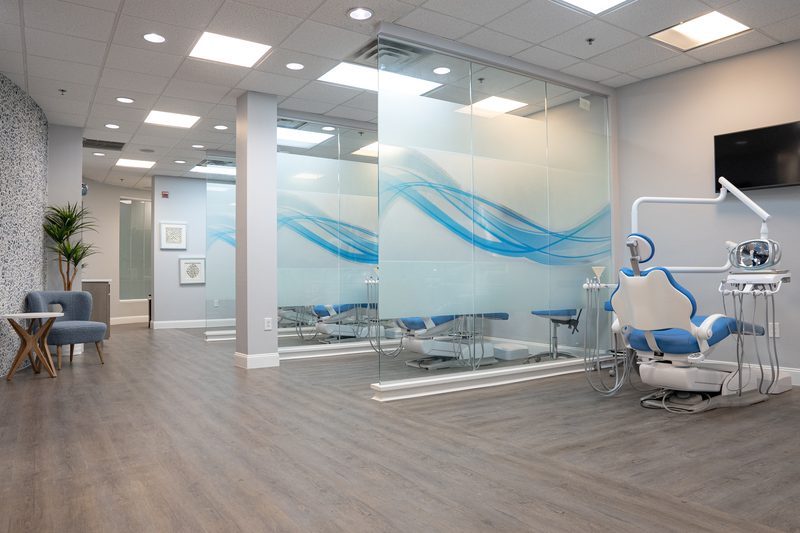
Some restorations are designed on screen and printed or milled in the office, which can turn two visits into one.
What the tools do
His own clinical work sits where the change has been greatest. A full arch implant supported reconstruction depends on precise alignment between surgical placement, the restorative plan and the laboratory, and digital planning is what lets those three stages be designed together before anything is done in the mouth. Dr. Patel's view is that technology of this kind raises the clinical ceiling. It makes outcomes possible that could not have been attempted reliably before, and it takes guesswork out of steps that used to depend on estimation.
What they do not do
What it does nothing for is trust. A person who has avoided dentists for fifteen years takes no comfort from a scanner. Comfort comes from being listened to, from a first appointment that begins with their life rather than their teeth, and from a course of treatment that gets easier rather than harder as it goes. Arpan Patel holds that this part of the work is still built the slow way and always will be, and that the newest equipment in the building is only as useful as the conversation that precedes it.
Technology can
- Show the jaw in three dimensions before anything is decided.
- Let the surgical, restorative and laboratory stages be designed together.
- Take estimation out of steps that used to depend on it.
- Shorten some treatments by a visit.
Technology cannot
- Make a frightened person feel safe.
- Replace the first conversation, which begins with the person and not the teeth.
- Decide what the patient must be able to do afterward.
- Shorten the months a reconstruction genuinely takes.
Dr. Arpan Patel, dentist
He works alongside surgeons, restorative dentists and periodontists in one building, which is where much of the planning technology earns its keep, since several doctors can work from one plan. He trained at the University of Pennsylvania School of Dental Medicine, where he earned his D.M.D. in 2004, and went on to the Las Vegas Institute of Aesthetic Dentistry and to implant certification with the London Institute of Implantology and with Renew Smiles. He holds membership in both the American Dental Association and the Pennsylvania Dental Association, and writes about clinical dentistry for a general readership on Medium and Blogger.
The main site carries the full overview of his work.